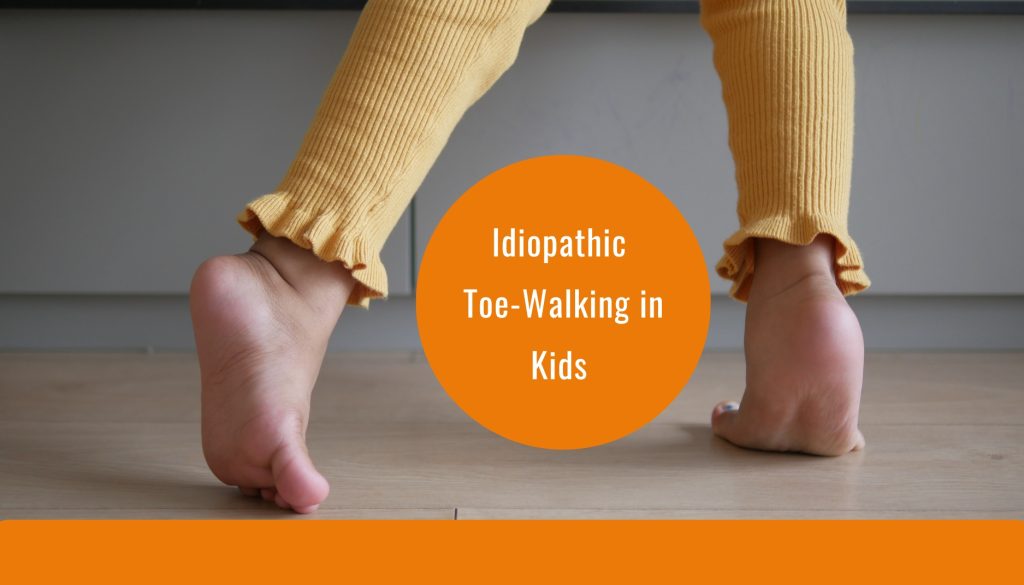
If you’ve seen your child walking on their tiptoes and are concerned, you’re not the only one. Many toddlers do this as they learn to walk. If it keeps happening as they grow and there’s no medical cause, it’s called idiopathic toe-walking. That’s usually when parents start searching for answers. At Xtremity, we’ve helped many families with this. The good news is that idiopathic toe-walking can be managed, and with the right support, most children improve a lot.
What is Toe Walking?
Toe walking means a child walks on their toes instead of using their heels. Sometimes, there’s no clear medical reason for this, which is called idiopathic toe-walking. Children with idiopathic toe-walking usually have normal muscles, nerves, and joints, but still walk on their toes.
Children might toe-walk out of habit, because their calf muscles are tight, or simply because they like the feeling. However, if toe walking continues, it can lead to:
- Tight Achilles tendons
- Balance or coordination difficulties
- Foot or leg pain

Common causes of Toe Walking
Several factors can contribute to toe walking, including:
- Flat Feet
Children with flat feet may have trouble balancing. Toe walking can make them feel steadier for a while by lifting the foot’s arch, but over time, it can change how their muscles grow. - Short Achilles Tendon
If the Achilles tendon is shorter than usual, it can prevent the heels from touching the ground. - Sensory Perceptions
Some children toe walk because they want more sensory feedback, while others do it to avoid certain surfaces. For example, they might not like how cold tiles or rough carpets feel. - Muscular Dystrophy
This genetic condition makes muscles weaker over time. Children who once walked normally may start toe walking because of it. - Neurological Abnormalities
Conditions like cerebral palsy or spinal cord disorders can change how a child moves and may cause toe walking.

Symptoms of Toe Walking
The main sign is walking on the toes instead of stepping from heel to toe. Other signs may include:
- Impaired balance and coordination
- Frequent falls
- Difficulty wearing shoes
- Challenges participating in sports or recreational activities
- Complaints of pain in the feet or legs
- Tightness in the heel cord
How Toe Walking is diagnosed
If your child often walks on their toes, a doctor may look for the following:
- Medical History and Questions
The doctor will review your child’s overall health, walking development, and any additional symptoms. - Physical Examination
They will watch how your child walks and check their feet and legs for anything unusual. - Neurological Examination
The doctor may run tests to make sure there are no issues with the nervous system. - Additional Tests
Sometimes, doctors use X-rays, CT scans, or MRIs to look for other possible conditions.
When should parents be concerned?
It’s usually not a problem if toddlers walk on their toes sometimes. But parents should talk to a doctor if:
- Toe walking continues after age 2–3
- The child cannot place their heels on the ground.
- There are signs of tight calf muscles, frequent falls, or difficulty with shoes or sports.
Having your child checked early often means treatment is easier and helps them learn to walk more naturally.
How to stop your child’s Toe Walking
Treatment is different for each child and depends on their age, flexibility, and how they walk. For mild cases, physical therapy with stretching, strengthening, and walking exercises can help. If toe-walking is a habit or muscles are tight, orthotics can guide the foot and encourage a natural walking pattern.
The role of Toe Walking orthoses and braces
Braces do more than just stop toe walking. They help guide the foot to move in a more natural and comfortable way. The best type of brace depends on your child’s needs, age, and how they walk.
Common types of braces include:
- AFO Brace (Ankle-Foot Orthosis):
- Helps control ankle movement
- Prevents the toes from pointing downward too much
- Gently stretches tight muscles over time.
- Often recommended for children with idiopathic toe-walking
- Leg Braces:
- Offer extra support and stability.
- Particularly useful for older children or those with more noticeable gait differences
- SMO (Supramalleolar Orthosis):
- Fits around the lower part of the leg just above the ankle
- Provides gentle support while allowing more natural ankle movement
- Great for children who need light correction or additional stability without restricting mobility
Each brace is made to support your child comfortably and encourage proper walking. With regular use, most children adjust quickly and keep running, playing, and moving as usual.
Are Idiopathic Toe Walking braces comfortable?
Modern braces for idiopathic toe-walking are lightweight, custom-made, and comfortable. When fitted properly, they don’t hurt or limit movement. Most children get used to them in a few days and can still play, run, and climb as the brace gently helps their feet move more naturally.
Supporting your child’s progress with Extremity
At Xtremity, we know that idiopathic toe-walking can feel overwhelming, but you’re not alone. With the right support, expert guidance, custom orthotics, and well-fitted braces, most children can learn to walk naturally, build healthy habits, and feel more confident. We provide personalized assessments, careful fittings, and regular check-ins to ensure that braces continue to meet your child’s needs as they grow. Parents are important too. Patience, consistency, and encouragement really help. Progress can take time, but every small step matters.
About Us
Xtremity Prosthetics and Orthotics is a specialized health clinic where treatment is provided by a specialized team which comprises allied health professionals as well as medical professionals giving a multidisciplinary approach towards prosthetic and orthotic rehabilitation care.
Most Popular