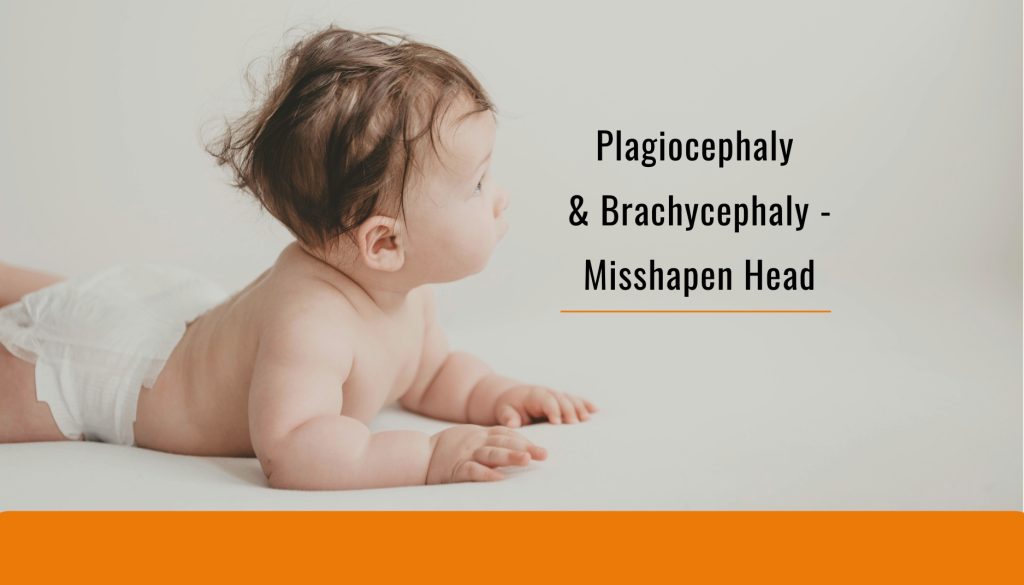
Have you noticed a flat spot or a deformed baby head? Many parents become concerned and search for flat head or abnormal baby head shape pictures when they first see these changes in their babies.
In most cases, the cause is a common condition called plagiocephaly or brachycephaly. While these can affect the shape of your baby’s head, they do not impact brain growth or development.
This blog will explain these conditions, their causes, how to prevent them, and how specialists can support your baby’s healthy growth through evidence-based care and advanced technology.
What Is Plagiocephaly?
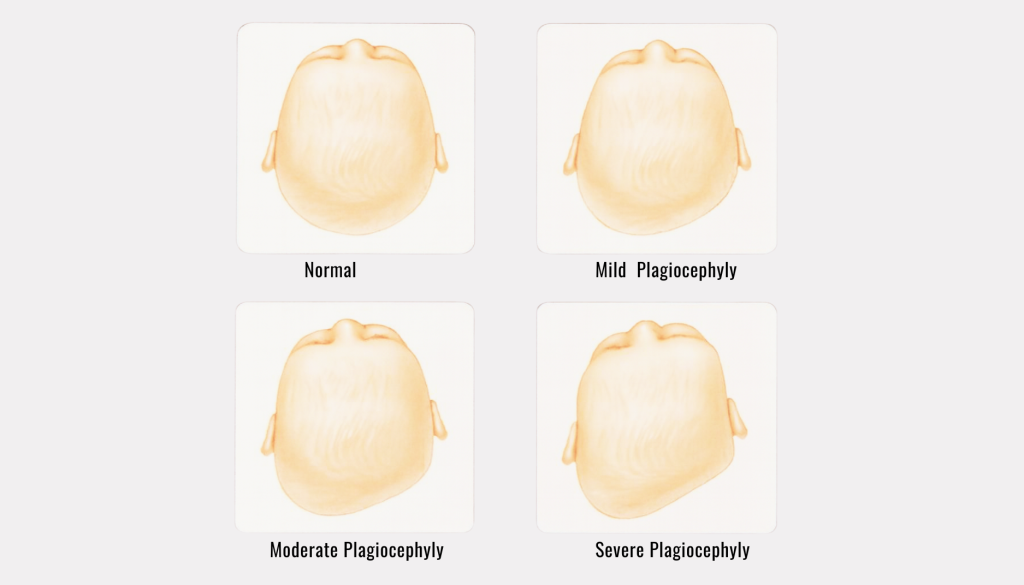
Plagiocephaly (play-gee-oh-kef-a-lee) refers to a condition where one side of a baby’s head becomes flat, making the skull appear uneven or asymmetrical. This occurs when pressure is repeatedly applied to one area of the soft skull.
While it can cause a visible change in head shape or facial symmetry, plagiocephaly does not affect your child’s brain or cognitive development. In most cases, it improves naturally as babies move, roll, and sit up.
What Is Brachycephaly?
Brachycephaly (bray-key-kef-a-lee) occurs when the back of the baby’s head is flat. Sometimes the forehead may appear more prominent and the face slightly wider. Like plagiocephaly, it is mostly a cosmetic concern and not linked to brain issues.
Both plagiocephaly and brachycephaly fall under what is commonly known as “flat head syndrome,” and together they account for most cases of misshapen baby head seen in clinics.
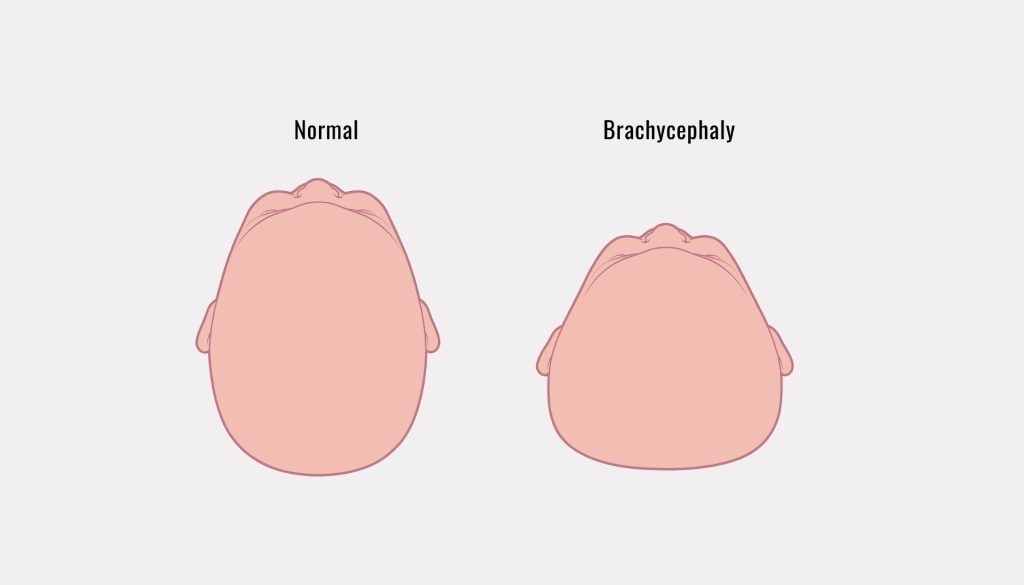
Brachycephaly vs Plagiocephaly
The child’s age and the ondition severity determine the duration of treatment. On average, it takes three months upto 6 months for treatment, with careful and frequent monitoring throughout the treatment.
The kid should constantly wear a helmet during playing, sleeping, or feeding, and it can be taken off during bathing for better results.
Feature | Plagiocephaly | Brachycephaly |
Flat Area | One side of the head | Back of the head |
Head Shape | Asymmetrical or uneven | Broad and short |
Possible Facial Changes | One eye/ear slightly forward | Forehead may appear wider |
Effect on brain growth | None | None |
Treatment | Repositioning, exercises, or helmet therapy (in severe cases) | Repositioning, exercises, or helmet therapy (in severe cases) |
What Causes a Misshapen Baby Head?
A baby’s skull bones are soft and flexible to support growth and ease birth. This flexibility means they can change shape if pressure is consistently applied in one area.
Common causes include:
- Lying in one position for too long
- Preferring to look or feed from one side
- Tight neck muscles (torticollis), which limit head movement
- Carrying or nursing your baby predominantly on one side
- Premature birth (softer skull)
- Position in the womb or use of birth instruments
In rare cases, a condition called craniosynostosis, where skull bones fuse too early may cause head deformity and require medical evaluation.
How to Prevent Flat Head Syndrome
Prevention starts with movement and variation. Babies spend much of their early months lying on their backs, so balance is key.
Here is what you can do:
- Alternate sleep position: Place your baby on their back while sleeping.
- Change cot orientation: Babies like to look at light or people. Switching cot positions encourages them to turn their head both ways.
- Tummy time: Begin short supervised tummy sessions as early as two weeks old.
- Vary feeding sides: Whether breastfeeding or bottle-feeding, alternate sides to balance pressure.
- Carry in different positions: Use slings, hold your baby upright, or lay them across your arm on their tummy or side.
These small changes reduce the risk of developing plagiocephaly or brachycephaly and encourage healthy neck movement.
When to See a Doctor About a Misshapen Head
See your paediatrician, maternal-child nurse, or physiotherapist if:
- The flatness worsens or does not improve by 4–6 months
- Your baby always looks to one side
- You notice uneven ear or eye positioning
- Your baby seems uncomfortable turning their head
Early advice and physiotherapy can often correct the problem before more advanced treatment is needed.
Treatment options for Plagiocephaly and Brachycephaly
In many babies, mild to moderate flat head conditions improve independently as they grow, start sitting up, and move their heads more freely.
If the flattening remains noticeable, your doctor may suggest one or more of the following:
- Physiotherapy: Helps in improving the neck movement and posture, especially when the baby has tight neck muscles (torticollis).
- Repositioning techniques: Simple guided exercises that you, as a parent, can use at home to encourage even head growth.
- Helmet therapy: Recommended only in more severe or persistent cases. It usually starts between six and eight months of age and is completed before the first birthday, when the skull is still growing and most responsive to gentle correction.
What Is Helmet Therapy?
Helmet therapy may be advised in a few cases where flat head remains significant.
Using 3D imaging, an orthotist designs a custom lightweight helmet that gently guides skull growth by relieving pressure on the flat area.
This is a safe, non-invasive treatment performed under specialist supervision. Combined with physiotherapy, it can help achieve a more symmetrical head shape before the skull bones fuse.
The Role of Xtremity in Brachycephaly Treatment
At Xtremity Prosthetics & Orthotics, treating plagiocephaly and brachycephaly involves much more than providing a helmet. Each baby’s care plan is thoughtfully designed by a team of orthotists, physiotherapists, and healthcare professionals who work together to ensure the best possible outcome.
Every step focuses on your baby’s comfort, safety, and well-being.
Why Parents Choose Xtremity
Choosing the right support for your baby’s care makes all the difference. At Xtremity, we combine clinical expertise with genuine compassion to provide safe, precise, and family-centred orthotic solutions.
- Advanced technology: We use CAD/CAM design and 3D printing methods to create precise, custom-fitted orthotic helmets.
- Tailored solutions: Each device is made specifically for your baby, ensuring comfort and gentle correction.
- Qualified experts: Our experienced clinical team follows proven techniques that help deliver safe and effective results.
- Accurate design: Digital tools and modern fabrication methods help create a seamless fit for every child.
- Parent-focused guidance: Support is provided to families at every stage, assisting parents in understanding and participating in their baby’s progress.
Your Baby’s Head Shape Journey at Xtremity
From the first visit to the final fitting, your baby’s comfort and progress remain our top priorities.
Our care pathway includes:
- Specialist assessment: A detailed examination to understand your baby’s head shape and needs.
- 3D head scanning: Accurate digital imaging to capture precise measurements.
- Custom orthotic fabrication: A lightweight, comfortable helmet made using advanced materials.
- Regular follow-ups: Continuous monitoring and adjustments to ensure healthy, balanced head growth.
Each stage of the process is handled with care and precision, combining technology, expertise, and compassion to help your baby grow confidently.
Helping Your Baby Grow with Confidence and Care
A misshapen baby head is more common than many parents realise, and in most cases, it can be improved with simple changes, regular monitoring, and proper guidance.
Early attention and gentle care can help your baby’s head shape develop naturally and symmetrically.
Book your appointment with Xtremity and take the first step towards gentle, effective care for your baby’s healthy head shape.
Frequently Asked Questions
Yes. In most cases, flat head conditions like plagiocephaly and brachycephaly improve naturally as your baby grows, moves more, and spends less time lying on one side.
No. Both plagiocephaly and brachycephaly are cosmetic issues that do not impact brain growth, learning, or development. They primarily affect the baby’s head shape and facial symmetry.
Helmet therapy is only advised if the baby’s head remains severely and persistently misshapen even after six months. A specialist can assess your baby’s condition using 3D scans and determine whether necessary.
Yes. The helmets used for flat head correction are light, carefully shaped, and designed to comfortably fit your baby’s head. They do not cause pain or restrict movement. Each helmet is regularly reviewed and adjusted by an orthotist to support natural, healthy skull growth.
If your baby’s head shape does not seem to improve, or you notice unevenness in their forehead or ears, it is best to seek medical advice.
You can speak with a paediatrician or visit Xtremity Prosthetics & Orthotics for a detailed assessment and personalised care plan.
About Us
Xtremity Prosthetics and Orthotics is a specialized health clinic where treatment is provided by a specialized team which comprises allied health professionals as well as medical professionals giving a multidisciplinary approach towards prosthetic and orthotic rehabilitation care.
Most Popular